Tuesday, 15 October 2013

Hallo Halloween II: Beelzebub Gets His Groove Back / Slow Walkers - 'Slow Walkers'


I'm currently typing this sentence for the first time on a bleak-looking grey, rainy day. Definitely a fitting time to listen to and write about Slow Walkers -- the collaborative release on LA-based label Peak Oil of experimental musicians / sonic artists Liz Harris (better known under the name Grouper) and Lawrence English.

The collaborative project (also named Slow Walkers) was described on Pitchfork in 2011 as being "a multi-media project about zombies [taking] the form of an album, video installations and a live audio-visual concert". Listening to the album, the conceptual links to zombies and to the genre of horror and horror cinema are not explicit, as such -- certainly not in the same way as, for example, Boards of Canada's more overt references to horror cinema by way of the soundtrack work of John Carpenter on this year's Tomorrow's Harvest -- but this overriding concept is something ever-present in the music and in the atmosphere of the music.

English and Harris' slow, crumbling, minimalist compositions make perfect use of noise and lo-fi drones to establish a bleak, cold, lonely mood and to create the impression of a wide, sparse, empty and abandoned space. Listening to these six tracks (which, for the most part, segue into one another) made me feel, in my head, as if I was Cillian Murphy's character in Danny Boyle's 28 Days Later (I know it technically isn't a zombie film, but - come on - it really is) walking through the vast and deserted streets of London: the once bustling, functional environment having collapsed completely within a very short period of time.

It's by no means a particularly 'easy' listen (if you're looking for a place to 'start' with both of these artists, this probably isn't it); but Slow Walkers is a conceptually rich and sonically detailed 40-ish minutes of dark, uncompromising atmosphere that is stopped throughout from seeping into the background (a potential risk when working within such abstract 'ambient' territory) through the compelling snatches of more kind of traditional melodic structures that we hear as degraded and broken (akin, significantly, to the structures of society / urban environments after a zombie epidemic), as well as through the fact that these deep and detailed tones and sound manipulations are all strongly characteristic of Harris and English's own distinctive artistic styles.

It'd certainly be interesting to see how well the album synced with the beautifully bleak shots of deserted London from Danny Boyle's 2001 film, 28 Days Later.
(image from The Phoenix)


With those distinctive styles in mind -- here are two recommended tracks from Harris' and English's
discography:

Lawrence English - 'Coda for a Fading Timeline'
I'll be honest; I'm much more familiar with Harris' work than with English's; but this, from Headphone Commute's excellent 87-track ambient / post-classical compilation, ...and darkness came, probably tells me that I should rectify that. Much in the vein of the work on this collaboration, the track is an short texturally-based work of broken-sounding ambient music in the vein of people like William Basinski and Fieldhead.
 
Mirrorring - 'Drowning the Call'
This is from Mirrorring: another collaboration of Harris', this time with Jesy Fortino (who performs under the name of Tiny Vipers). I reviewed their album, Foreign Body,  for BeardRock here, and talked about how effectively (in a way similar to that that can be heard on Slow Walkers) Harris' unique vision crossed and mingled with that of Fortino to create something that sounded unique and special to their collaboration. As well as that, I'd say that Mirrorring's album would be an excellent recommendation for someone interested in introducing themselves to Grouper's discography -- Foreign Body's dreamy, drone-folk showcases Grouper's distinctive approach to recording and production albeit within a more accessible context that borrows from Fortino's slightly more traditional singer-songwriter-esque approach.

* * *

Slow Walkers was available on vinyl from http://www.thisispeakoil.com/
and is still available for download (£7.99) from iTunes.

Check out the video for 'Wake', below...


'Wake' from Slow Walkers - Lawrence English / Liz Harris from ROOM40 on Vimeo.

Saturday, 12 October 2013

Hallo Halloween II: Son of Hallo Halloween / A Small Assortment of Things That Terrified Me As A Kid

After the 'haunted childhood artefact' feel of Anodyne I wrote about; I thought that, in this bit of the run-up to Halloween, I'd write about an assortment of things that harrowed me as a young'un. An interesting subject, because I don't think - in adulthood - that we ever really experience in the same way that particular thrill of really feeling scared of a safe, constructed work of fiction.

Given the nature of childhood, some things I was scared of then are kind of dumb things to relate with fear (case in point: I remember an episode of Extreme Ghostbusters freaking me right out), but this list is mainly consistent of some legitimate (primarily) '90s-based recommendations (though, I'll warn you now, one of them is borderline impossible to find (save maybe through torrents or eBay or something)).

* * *

The Black Riders in BBC Radio 4's 1981 adaptation of The Lord of the Rings

I think the first volume of The Lord of the Rings, The Fellowship of the Ring, is my favourite part of J.R.R. Tolkein's influential fantasy saga; there's a smaller-scale mystery and creepiness to it all that, when contrasted with the cosy rural idyll of the Shire, creates a tone that I prefer to the later volumes' huge, epic-scale battles and quests.

One major reason for me having this opinion is probably down to my first exposure to the story being through the 1981 BBC Radio 4 adaptation of The Lord of the Rings -- which incidentally I had no idea was from 1981, having listened to it as a kid in the '90s (usually around Christmas time; and in the dark for extra atmosphere), thanks to them having been released on about a billion cassette tapes. I remember particularly my infant mind being creeped out by the Black Riders -- who really represent more than anything else this sense of the cosy warmth of the Shire being broken by the mysterious, evil goings-on in the outside world.

Part of it, I think, was the fact that, with this radio version, I had only the atmospherically rich sounds - the creepy voices of the Black Riders, the scared responses from the innocents they encountered in their search - to use in constructing an image in my head; in a way giving these characters this really effective sense of 'formlessness' in my imagination (the sort that's well-trodden ground in horror: think Lovecraft's descriptions of monstrosities impossible for the human mind to comprehend, and how Ridley Scott hides his own Lovecraftian horror creation from the audience throughout much of his 1979 classic Alien).

Unfortunately, I couldn't find a clip on YouTube -- but here's the theme music from the radio series (which is probably available in more contemporary formats than tape).


-

Sephiroth, from Final Fantasy VII

Playing Final Fantasy VII as a kid in the age where the Internet wasn't such a big deal (the slow-loading forest of GeoCities sites that it was) is - despite how utterly tediously nerdish a topic it looks on paper - something that I do find quite interesting.

To my eyes, Final Fantasy VII wasn't just a game. It was a three-disc enigma; a hugely immersive world filled to the brim with fascinating secrets, amongst them the creepily elusive Emerald WEAPON (I could write a thing about that, but it'd just be pretty much "saw a creepy-looking monster in the underwater depths, went up to it, died instantly, learned to respect the boundaries of this madly ominous beast") and the - to my childhood self, especially - mindblowingly deep layers of hidden backstory (I once got really excited because I thought I'd discovered a cut-scene that no-one else had found; I think I remember feeling very slightly offended at the juxtaposing ambivalence of my parents when I told them the world-changing news).

One mysterious enigma that really got to me when I first played it though, is actually one of the most major parts of Final Fantasy VII: Sephiroth.

I knew virtually nothing of the game or its settings and characters when I first picked it up and, reading the character list in the manual, I noticed Sephiroth's entry and how it's ridiculously vague - no picture, no age, a brief description of him having disappeared, and virtually nothing else. Then, gradually, this mysterious character sneaks into the story - bringing with him this huge sense of dread, frighteningly competent displays of violence, and twisted, tormented, borderline batshit motives for his world-threatening evildoing - and had me scared, as well as enthralled and immersed into the world of the game.

The extent to which I found Sephiroth scary can be seen in the instance when I woke up in a frightened jolt having, in my dream, come across what seemed to be Sephiroth's driving licence (or some standard form of identification, anyway).

Now, what the hell is that all about?


-

Assorted episodes of The X-Files

I remember that I impressed someone at school with the revelation that I'd been allowed to stay up and watch The X-Files. My Fonz-level veil of coolness at that point would have smashed into a billion pieces if I had revealed that I had resultantly been unable to sleep (more like refused to for fear of alien abduction / a Jersey Devil mauling) and that my parents decided I probably shouldn't stay up and watch The X-Files again.

For all the show's wit and humour, I think the main thing I got from it was the threat of imminent attack by paranormal entities. In the West Midlands. It turns out I may have had a point (though I probably didn't).

Not much else I need to say about The X-Files; stick to the early seasons for guaranteed quality.


-

The Realms of the Haunting

I think it's borderline impossible to find nowadays, but if you ever get the opportunity (getting past the whole DOS compatibility issues, etc.), I'd definitely recommend at least having a look at Gremlin Interactive's 1996 game The Realms of the Haunting.

The game is a first-person-shooter / horror adventure that puts you in the shoes of Adam Randall, who must explore an abandoned mansion in order to investigate the mysterious (and, as we find out, supernatural) circumstances surrounding the death of his estranged father.

There's a lot about Realms that's rather dated now - most notably the full-motion video cut-scenes (actually used a lot more effectively than many of its contemporaries) and the early 3D; but there's equally lots about it that stands up today and, in some cases, was ahead of its time. For example, there's the then-novel blending of the action-orientated first-person-shooter genre with the narrative elements and puzzling of the graphic adventure (this is two years before Half-Life received considerable acclaim for imbuing its first-person action with more sophisticated narrative elements); and the fact that the player has this expansive, haunting, excellently-realised environment of the house (and of the myriad strange places it leads you to) to explore, which is only really hindered by the fact that the player is required to switch between the four CDs irritatingly frequently in order to so.

My memories of playing it as a small child aren't exactly expansive, because I refused to exit one of the rooms out of sheer terror at the fact that I would be confronted with the game's first enemy; but, as I got older, I mustered up the psychological strength to soldier on and I can safely recommend this as a great, underrated and, unfortunately, largely forgotten game. Ideal if you're interested in seeing a relatively early example of an action game having the ambition to ramp up the atmosphere and story.


-

Dr. Fred's voice from Day of the Tentacle

Messed me right up.

Thursday, 3 October 2013

Hallo Halloween II: The Bloodening / 'Anodyne'

Once again, Halloween's on the way -- and I'll be providing, in the run-up, some examples of seasonally relevant culture-y stuff that you can make use of to keep yourself entertained while hiding from trick-or-treaters and their inhuman demands. Kicking off this week with independent developer Analgesic Productions' surreal action-adventure game Anodyne.


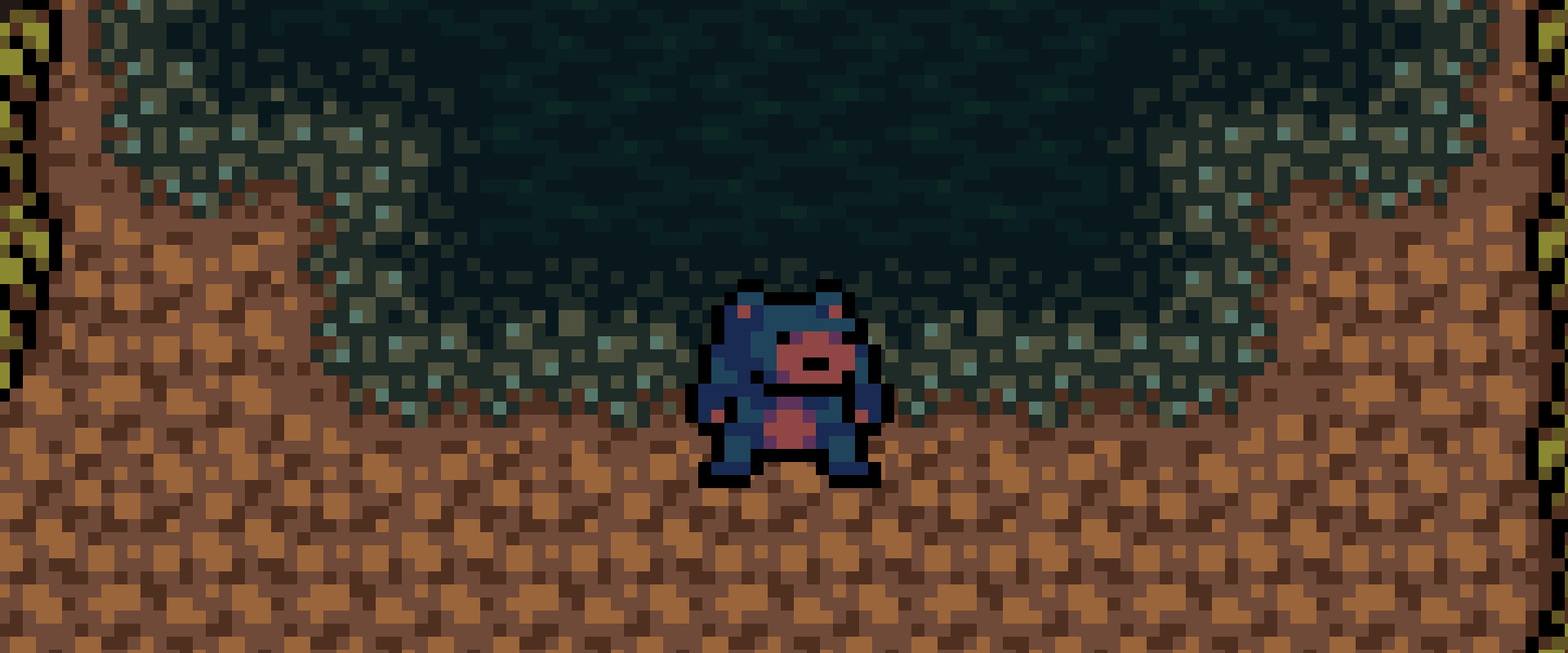
Looking at Sean Hogan and Jonathan Kittaka's 2012 game, Anodyne, there are quite a few aspects of it that that don't necessarily make it look like the most obvious choice of game to be looked at in relation to Halloween. The game's got a relatively prominent sense of humour; on the surface, it draws comparisons more to an old Legend of Zelda game than to, say, Silent Hill or Forbidden Siren; and there are plenty of moments that could be seen as lightly whimsical: for example, the girl with a bike called Wares, and a bear called James who asks you not to defecate on his berries.

Of course, in talking about how Anodyne contrastingly has many other elements that create a sense of unease (and in a way, too, that makes these aforementioned lighter aspects contribute to this dark atmosphere), I'll make a little reference to a compelling old online urban myth I read about a few years ago about a haunted Majora's Mask cartridge.What interested me about that (to get quite wanky about it) was how, like any good ghost story, there were depths to it that, through the supernatural elements, had some resonance with real life -- this idea of someone, in adulthood, revisiting something representative of the carefree innocence of his childhood and finding it tainted with the death and sadness that people grow to realise is an inherent part of existence.

I have no idea whether Hogan and Kittaka are aware of this particular 'Creepy Pasta' (there's nothing that conjures up fear and dread like a famous and widely-appreciated staple food), but I definitely think that their game shares, to some extent, this same vibe of 'corrupted childhood artefact'.


To gamers of a certain age (i.e. my age, and a bit older), aspects of the game's presentation and gameplay will likely evoke nostalgia. Probably bringing back memories of playing old Super Nintendo games, or maybe - if you're closer to my age - of playing something like the old Pokemon games on the Game Boy.

Further comparisons with such games (specifically something like Zelda) can be seen in the premise and storyline of Anodyne: travelling and puzzling through a variety of dungeons and environments, with the objective being the seemingly simplistic one of having to "save the Briar from the Evil Darkness". It is here, in the unfolding of this storyline, though, where a player will also first notice the 'haunting' in all the nostalgia and apparent traditionalism.


Emerging from the apparently simple and traditional 'fight the evil force' storyline are an array of fascinating, cryptic mysteries. You'll come to play through increasingly strange and imaginative settings (I don't want to spoil these -- though the monochrome world alone makes the game very suitable for Halloween playing); meet a cast of eccentric, bizarre characters and enemies who serve to compellingly complicate any search for clarity with regards to what's going on; encounter commendably nuanced suggestions of heavy narrative themes that include murder, loneliness and suicide; and, after the credits roll, you have the chance to experience the game world in a thrillingly innovative new way.

All of this (coupled with the excellent soundtrack by Seagaia) serves to create and maintain this really effective atmosphere of melancholy, unease and deliberate 'brokenness' throughout the entire game; emphasising the creeping surrealism of its darkest moments, and skilfully undercutting the moments of lightness, humour and naivety. Is the ever-shifting world of Anodyne its (with this in mind, perhaps aptly named?) protagonist's attempt to escape the pressures and stresses of the adult world by trying to retreat into a dreamlike fantasy representative of the 16-bit video games of his more carefree childhood days?

I, frankly, don't know... and it doesn't really matter whether or not you 'figure it out', because the challenging, yet addictive, classically-styled gameplay is accessible, entertaining, and never alienates; helping to form a complete piece in which the player is able to experience, analyse, and - importantly - enjoy Anodyne's unique complexities at his/her own pace.

Great stuff.


Anodyne (Analgesic Games, 2012)
Available for £6.99 from Steam here -- http://store.steampowered.com/app/234900


------------------------------------------------------------------------------------------------------------

On a similar note...

Lone Survivor
(Superflat Games, 2012)

Jasper Byrne's 2012 independent survival horror game, Lone Survivor, is - like Anodyne - a fever-dream-esque experience that similarly works a constant air of unease and danger through Silent Hill-esque dilapidated environments, a relentlessly surreal and bleak storyline, and experimental survival-based gameplay mechanics.

Available for £6.99 from Steam -- http://store.steampowered.com/app/209830/

Tuesday, 1 October 2013

Label to Keep Your Ears On: Sparkwood Records

A while ago I wrote a piece about some tracks released by Above, Convenience Store! on their Soundcloud page; in this piece I'm going to recommend the independent label started by the duo, which is named Sparkwood Records.


At the time of writing, the label is home to three releases -- Above, Convenience Store!'s own full-length album Building in Search of the Sun; and self-titled EPs from the Elephant Frame and Eyesix.

* * *


Building In Search of the Sun cover art

Building in Search of the Sun continues the promise of the duo's earlier work; relevantly enough, I first listened to this from start-to-finish on a day that had kicked off with lightning, thunder, and lashings of rain. This is an album that reflects the storminess and the turbulence of the natural environment -- something that can be heard in the samples of rain on a track like 'Boneyard Stray Dog', and atmospherically throughout the album in the windiness evoked by the lo-fi drones and layers of distortion that can be heard in tracks like 'Mask of Mammon' and the aptly-titled 'Shaken from Earth'.

Also interesting is that this album shows the duo nicely branching out and showing a bit more of themselves in their music: while twanging guitars like those on 'Hierosheva', and the synth textures of 'Dusk Encryption' still sonically bring to mind the influential collaborative efforts of Angelo Badalamenti and David Lynch, I can hear them using these sounds to explore different themes and ideas. For example, I get from this album -- from the storminess of the sounds, from the interesting title, and from the cover art's towering pylon against a sinister grey sky -- a sense of the duality and conflict between humanity and nature.

From a label that can be seen to (as you'll see from the other release) specialise in highly nuanced, almost 'visual', sounds, it's this full-length release from the label's founders that I feel really sets the standards.


The Elephant Frame EP cover art

With this self-titled EP, Oslo's The Elephant Frame certainly fits well alongside Sparkwood's founding artists. The five tracks on this EP have the same evocatively mysterious 'outdoorsy' feel of the tracks on Building in Search of the Sun, albeit with less use of distortion, which serves to lend the Elephant Frame's work a general sense more of grey-skied cloudy melancholy than the stormy turbulence of Above, Convenience Store!. As a sense of greater threat is introduced in EP closer, 'A Day to Remember' - as distortion and noise begin to take on a greater role against a contrastingly gentle guitar line - I can visualise a storm beginning to emerge from the melancholy, and I find myself anticipating what lies in store for future releases from the Elephant Frame.


eyesix EP cover art

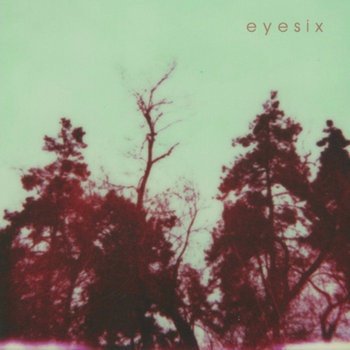
Offering a different sound altogether is eyesix. In keeping with the general style of the label, this is music fascinated with and deliberately evocative of nature and the outdoors -- something that can be seen in the similar artwork, and that can be heard in the continued utilisation of field recordings / samples of field recordings on this release. Crucially different though is the mood evoked: where Building in Search of the Sun and The Elephant Frame explore dark clouds and storms, eyesix brings to my mind's eye a greater sense of a brighter atmosphere; something more like a clear, blue-skied Winter's day.

The Boards of Canada-esque synthesizer textures give the EP an unmistakably nostalgic, almost 'hauntological' sound (implied also through track titles like 'Nuclear Family' and 'Soylent Green'); and are coupled with a good ear for melody that helps the music act as more than just a vehicle for nostalgia -- something that I find can sometimes be a downfall with many artists working with this similar sonic palette -- as the music evokes a feeling not dissimilar to going for a carefree walk in a fresh, cool Winter breeze, as the sun retreats behind hills. Especially on the excellent 'Soylent Green'.


* * *

Definitely a label I'd recommend -- not just for the music (as in tune with my taste for music that blurs the lines between 'organic' and 'electronic' as it is) -- but also for this ambitious sense of almost continuity that runs through the work they've released to date: this sense that Sparkwood are a label who aim to reflect, through music, the various faces and characteristics of the outside world and how people can interact with it.

Details from where you can hear their music on Soundcloud, and stream / download (pay-what-you-want) from Bandcamp are...
Soundcloud -- https://soundcloud.com/sparkwood-records
Bandcamp -- http://sparkwoodrecords.bandcamp.com/

Saturday, 31 August 2013

Epilogue #2

The Trial
Franz Kafka


It seems like there's not a great deal that I can say about Franz Kafka that's not already been said. But having read, for the first time, what is (except maybe for the short story 'The Metamorphosis') probably his best-known work, The Trial (as part of Vintage's The Complete Novels collection), I feel the urge to say all that stuff anyway.

For a number of reasons, reading this novel rarely gave me the feeling of one written in the early 20th-Century: obviously, there's the fact that the contemporary reader can most likely empathise with Josef K.'s frustrating dealings with a satirically absurd bureaucracy (I shamefully admit that I drew parallels between K.'s anguish and the time when I got a bit annoyed because I had to keep sending documents to the Student Finance Company). But there's a lot in Kafka's general world view that I think is very interestingly more in line with later writers and with the contemporary age in general -- the shadowy dystopian setting of The Trial, the depiction of a society controlled by unknown and un-knowable forces that exert their power elusively from a space seemingly towering above even the most elaborate hierarchies is something more akin to the culture and thinking of the post-modern age: the conspirators so frequently rambled about by Thomas Pynchon protagonists, for example, the vast conglomerates of cyberpunk fiction, or the almost alien figures behind the scenes of Mulholland Drive's film-within-a-film The Sylvia North Story.

Furthermore, there's been much notice from others regarding the fact that what - at the time - may have been read primarily as a darkly surreal satire on the bureaucracy of modernity gained a much more sinister sense of relevance in the wake of the totalitarian, fascist regimes that would contribute to the shift from modernity's world of order and categorisation into post-modernity's (rather Kafka-esque) age of increased uncertainty, distrust, and paranoia (hello GCHQ / the NSA!). This is definitely something I picked up on throughout my reading of The Trial: in the aforementioned elusiveness of its dystopian power structure, I noted that - far from being an Orwellian portrait of an oppressed 'Big Brother' state - it was (even though the whole novel is given a dreamy, surreal tone by Kafka's focus on the insular figure of K., and his effectively blunt and straight-forward prose) a more hauntingly recognisable dystopia: one where the governing systems' corruption and unhealthy disconnection from ordinary people doesn't make itself apparent (or maybe just doesn't matter to you) until, like K., you find that your fate is in its hands.

Though the novel does have a final chapter that ends K.'s story, it's a shame that Kafka died before writing what leads up to it, as The Trial resultantly concludes with an abrupt time shift. Though that said, it is quite fitting with K.'s constant state of profoundly not knowing what's going on that the novel ends so very strikingly and with such a crucial lack of supporting context as to be possibly even more powerfully Kafkaesque than Kafka himself ever intended.

I definitely look forward to progressing onto Amerika (and then, The Castle soon after) in the near future.

Thursday, 15 August 2013

Epilogue #1

Epilogue is a new section where I aim to write a little bit about a book that I've recently read... Just so you know.
I'm back after my slight absence with my brows facing more towards the moon than ever before; and I aim to break new ground by blogging about literature without at any point making reference to tea or gin.
Like what some sort of enterprising pioneer of the form would do.


Mason & Dixon
Thomas Pynchon

Around this time probably about two years ago, Thomas Pynchon was one of those writers whose work I thought I would be eternally intending to read without ever getting round to it. Since then (partly due to deciding to write a chapter of my undergraduate dissertation on Gravity's Rainbow), I've now read his first five novels -- as well as some of the hilarious bits of Pynchon miscellany that have been archived on the line (see: http://www.themodernword.com/pynchon/pynchon_essays_cohen.html / http://www.themodernword.com/pynchon/pynchon_essays_dailyshow.html).

Most recently - as you can probably tell from the massive picture and heading above - I've read his 1997 novel, Mason & Dixon. After 1990's Vineland - smaller-scale, and more low-key in its thematic complexity than typically associated with a Pynchon novel - this novel represents more of a return to the sprawling, dense and tonally eclectic fictions of V. and Gravity's Rainbow.

The striking difference here is that - unlike with his previous works - Mason & Dixon's primary setting is far-removed from the recognisable 20th Century, modern / post-modern age to which Pynchon is so strongly linked. The novel follows a lengthy period in the 18th century, centred around the lives of astronomer / surveyor team Charles Mason and Jeremiah Dixon, best-known for charting the Mason-Dixon line to establish the correct boundary between Pennsylvania and Maryland.

Despite this, it's definitely worth noting that Pynchon's historical narrative is firmly connected to the 20th / 21st century age of late / post-modernity... and it's this that leads me to talk about what I feel makes Mason & Dixon really fit with its aforementioned encyclopaedic predecessors. From his work, Pynchon's general aesthetic attitude towards history is (and for more about this, by the way, read up about Linda Hutcheon's ideas about 'historiographic metafiction') one that argues the importance of the outsider and the 'preterite': leaving us with novels that highlight how the present moment is always essentially the culmination of the chaotic mess of all events of the past (including, crucially of course, events 'forgotten' by or 'rejected' from the grand narrative of history).

This aesthetic approach to history and historiography can be seen in by the bucket-load throughout this novel: Mason and Dixon's tale is framed as a story told by the unreliably subjective and human narrator Wicks Cherrycoke to members of his extended family; the novel blends impeccably researched historical fact with obvious fiction (e.g. a talking dog, ghosts, a super-intelligent mechanical duck); a focus on the 'preterite' throughout history (the stories of slaves, indigenous cultures, etc.). Most significantly, almost everywhere is this idea of the many events of the past leading unquestionably to the present moment: it is as present in the largest aspects -- primarily, I refer the ever-looming theme throughout the book of how the innocence and naivety of superstition and religion / folklore gives way to the 'experience' of rationality and science in modernity and of commerce and consumerism in post-modernity -- as it is in the tiniest details -- the presence of Pig Bodine's similarly drunken ancestor, for example, and even a paragraph describing a grandfather clock that I feel can be read both as an extremely subtle allusion to the sort of shadowy almost-fascism that features so heavily in Vineland, and as an even more subtle reference to George Orwell's 1984 (for which Pynchon wrote a foreword, fact fans).

As is no doubt evident, there really is a hell of a lot in Mason & Dixon. Though it may seem a bit slow to begin with, and maybe not quite as detailed and intense as some of Pynchon's other work; if you persevere, it becomes apparent just how filled to the brim with detail, warmth, character, ambition, insight, and wonder this fascinating novel's 700-plus pages are.

Saturday, 11 May 2013

Above, Convenience Store! - Tūndâr / Arvedálki Beaivvada (Foundcloud #7: A Set Review)

This month's Foundcloud thing is - unlike the previous instalments - going to be a look at one specific set. I think it's good to keep my possibly non-existent readers on their possibly non-existent feet.

What attracted me to write about this set was that I'd been particularly taken by some of Above, Convenience Store!'s earlier work that they had released on their page; in particular, the track 'Up to Jack's for No Good' -- a brilliantly atmospheric Twin Peaks-sampling piece that incorporates the uniquely eerie tone of that aforementioned show into an appropriately smoky almost trip-hop context.

This sense of the eerie and the pastoral is something that runs through much of the Norwegian duo's work: their hazy, dream-like sounds often sound lo-fi, but they never sound restricted to within the confines of a bedroom studio. Like fellow lo-fi experimentalists Grouper and Fieldhead - Above, Convenience Store!'s droning lo-fi compositions often sound as if heard somewhere in the vast expanse of the outdoors, from a distant clearing beyond oppressively tall hills and trees.


This set - Tūndâr / Arvedálki Beaivvada - is no exception. Tūndâr begins with murky reverberating guitar chords that gradually come to be accompanied by further meticulously-placed layers of distorted guitar and synth drones. All of this melds together to fuse into one huge, spacious sound that sonically recreates the feeling of harsh winds forcing themselves through the trees and chilling the skin.

Second track Arvedálki Beaivvada pretty much starts straight away with the dense wind-like drones, underneath which are snatches of melodies hidden and buried beneath the chaos. Breaking this is a guitar passage that, as well as being evocatively haunting, also serves effectively to calm the storm: giving structure to the thick layers of noise as they shape themselves to fit the guitarwork in a way that sounds appropriately organic and natural. All of this - in a way somewhat reminiscent of the work of Flying Saucer Attack or of Mirrorring's excellent Foreign Body - establishes a very effective dichotomy between subdued calm and stormy chaos.

While writing this, I also found that the duo operate a Bandcamp page -- http://aboveconveniencestore.bandcamp.com/ -- where you can stream and download two of their EPs - the brilliant Gasfarming EP, which contains the aforementioned 'Up to Jack's for No Good'; and the Planetary Exiles EP, which I have yet to listen to.

--- --- --- --- ---

While I'm here, I'd also like to take the opportunity to share the fourth instalment in Body in the Thames' series of mixes showcasing the music of the Drowned in Sound community, on which is contained a track of mine, 'The Almost Harp', as well as eleven other tracks by the freakishly talented members of the DiS forums.


Tracklist:
1. Ghosting Season - Time Without Question (alternate version) (DiS user worrier1)
2. Evangelink88 - Shok Shok (DiS user evangelink)
3. J Howes - TD-W700 (DiS user Howes)
4. Moth Effect - Toggy Dubness (DiS user bongodeldrongo)
5. Aquatic Slime - Howling (DiS user wasted_opportunity)
6. Cementimental - . Strangely Enough, There Was Also Electricity in Ataru's House (DiS user cementimental)
7. Internet Forever - White Light Collision Course (DiS users alcxxk, laura_wolf, & hrtbps)
8. Neon Highwire - Just Suppose (DiS user maosm)
9. oh-dude - 120 to 30, delayed and filtered (DiS user chris-budget)
10. Go Faster - When the last note sounds (DiS user dead_fred)
11. Falling Stacks - View of a lake (DiS users moribund & JimmyHuntspill)
12. Mute Branches - The Almost Harp (DiS user mute-branches)